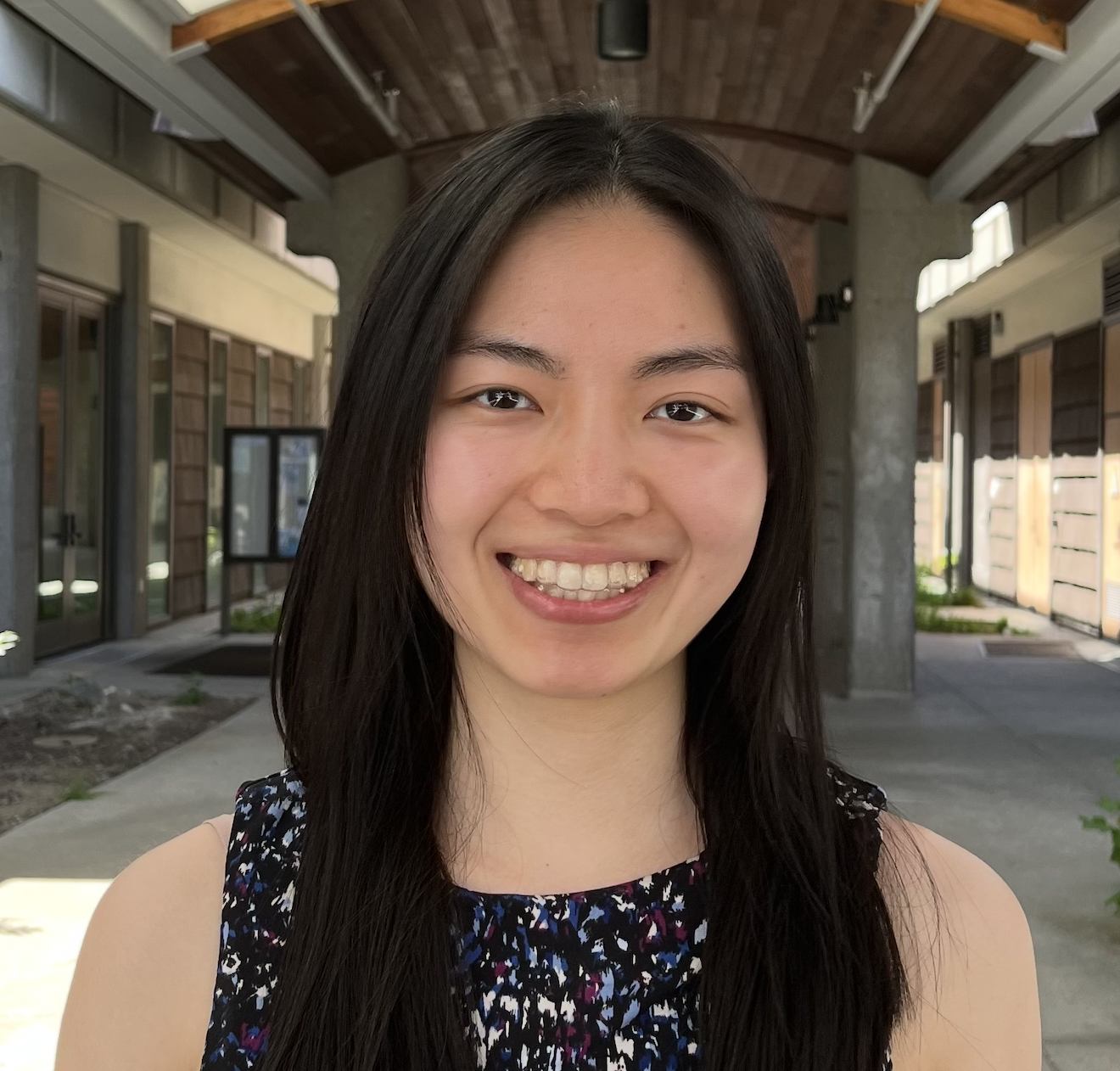
Lois Wong
AI Librarian, University of Chicago
I’ve had a longstanding obsession with silence—specifically, the idea of silence as a signifier and absence as a parsable signal. In Prince and Smolensky’s Optimality Theory, it is the non-words that reveal the underlying structure of a language. Debussy defines music as the silence between the notes; Cage shows how silence is compositional. Woolf cites unwritten books and Du Bois posits the “eloquent omissions and silences” in sorrow songs as articulations of pain and tragedy.
My work is one instantiation of this obsession. I'm interested in how archival silence and unrepresentative training data surface as algorithmic bias and model error, as well as building black-box evaluation methods to identify knowledge gaps and targeted remediation to close them. LMs learn from corpora that disproportionately preserve the profiles and perspectives of certain groups, e.g. those historically afforded an education and platform, while underrepresenting others due to factors like data quality, language, and uneven digitization. Those absences are not only historical; they are ongoing. People are still missing and being silenced, and developing methods to detect and surface that is ultimately where I want to take my work.
I have a BA in Linguistics from UC Berkeley and an MSE in Computer Science from Johns Hopkins University, where my research focused on information retrieval and NLP. Working across big tech, startups, nonprofits, and academia have given me a strong sense of how novel technologies are developed, adopted, and governed across different contexts and priorities. A significant part of my work involves building the education and infrastructure for broader participation in AI development and adoption as a means of surfacing gaps and reducing harm. Refer to my LinkedIn profile to learn more about my work as the first AI Librarian at the University of Chicago.
Projects
AI Symposium
We often hear that AI development needs perspectives from other fields such as the humanities and social sciences. While concerns about the societal impacts of AI continue to grow, scholars have been studying questions of representation, power, labor, creativity, and the social impact of disruptive technologies for decades. At the same time, practitioners are actively exploring how to develop, deploy, and evaluate AI systems responsibly.
Still, there is almost no infrastructure connecting interdisciplinary research to the organizations and communities where AI is developed and deployed. The people who study the harms and social impact of disruptive technologies are rarely in the rooms where these systems get designed and built.
Featuring keynotes, panels, and working collaborations, this symposium will surface how individuals and institutions can play a more active role in shaping the technologies that increasingly impact everyday life. Featured collaborations include the SJSU AI Center for Civic and Social Good, a first-of-its-kind space where academic and public libraries, city government, and industry partners converge to advance responsible innovation. Proceedings will be published in UChicago's institutional repository.
Anticipated date: Late April 2027 | University of Chicago
Community of Practice
Noticing that many academic libraries are independently solving the same AI adoption and implementation challenges, I co-founded a cross-institutional community of practice with Sharesly Rodriguez (San José State University) and Will Huggins (Stanford). We develop openly licensed resources and infrastructure for collaboration to reduce duplicated effort and increase collective impact.
Gaita: A RAG System for Personalized Computer Science Education
Gaita is a conversational RAG system that generates personalized Computer Science learning pathways from open-access courseware. Inspired by my own transition into tech, Gaita makes CS education accessible to learners from non-technical and non-traditional backgrounds.
Essays
The Silent Account of American History
On how omission, lost names, and unsung songs constitute their own account of American identity.
What it Means to be an Artist — and Why I Study Computer Science
Refer to the endnotes to see the theories and theorists that motivated me to pivot into CS.
Optimality Theory, A Room of One's Own, and Education as a Panacea for Pain
Another "proof" of the silence thread citing theories and terminology from Linguistics (phonetics and phonology) and Literary Criticism.
My Personal Statement of Purpose
The PhD statement that got rejected everywhere that I still stand by (mostly). I followed the education thread but it wasn't quite the answer I was looking for. The original thread was always on silence and we shall see where that goes.
Everything is Worthwhile—Grounding in Classical NLP
During my undergraduate career, I fell madly in love with logic and all things formal. This is, unironically, how I made sense of the uncertainy, delayed validation, and lack of visible output during my transition into CS.
Mere Exposure, Affinity, and Homecoming: ∃x in Classical Music
On music theory, familiarity, beauty, and homecoming. Read until the end to see a funny meme I created.
View my full list of essays here.
Selected Talks & Workshops
Upcoming Talks
ACRL 2027: Comparing Notes: Initial Impacts and Future Directions from AI Roles in the Library
April 2027 | Conference Presenter, with Sharesly Rodriguez
Oregon Convention Center, Portland, Oregon
Past Talks
Introduction to AI: A Foundations Seminar; Beyond the Basics: Taking Your AI Knowledge Further
An evening of two seminars for UChicago alumni, parents, and friends — examining what language models are technically and epistemically, and exploring trust, and responsible use.
September 2026 | Speaker
Guildhall, London, United Kingdom
Appropriate Use of AI
August 13, 2026 11:00 AM | Workshop, with Taylor Faires, Claude Training Series
Summer Institute in Social Research Methods, Session on Responsible AI
June 2026 | Guest Lecture, with Taylor Faires
Charles M. Harper Center, Booth School of Business, Room 104B
AI in Academic Work: Capabilities, Limitations, and Responsible Use
May 11, 2026 12:15 PM | Invited Speaker, AI & Me Series, University of Chicago Law School
University of Chicago, D'Angelo Law Library, Room V
AI in Academic Librarianship: What This Work Looks Like in Practice
April 2026 | Invited Speaker, University of South Carolina School of Information Science
What AI Can and Cannot Do
February 17, 2026 2:00 PM | Invited Speaker, Grad @ UChicago
UChicago GRAD Headquarters
Town Hall: Directions for AI
February 2026 | Speaker, University of Chicago Library
University of Chicago, Regenstein 122
Gaita: a RAG System for Personalized Computer Science Education
September 2024 | Research talk at Apple
View my full list of talks here.